Planning electric vehicle charging is no longer a minor detail for new developments. It affects site design, construction budgets, tenant satisfaction, and long-term property value. A few charging points beside a parking wall may look sufficient today. They may not be enough tomorrow.
The central question is simple: How to plan EV charging infrastructure for new developments without wasting space, power, or money? Tom Moloughney, an EV charging consultant and industry educator, offers a practical principle: “Charging should be planned around how people live, not simply where electricity is available.” That idea changes the entire planning process. Developers must study parking duration, household travel patterns, fleet needs, visitor access, and future vehicle adoption. They should also review grid capacity before contractors pour concrete. Small oversights can become expensive upgrades.
This guide explores seven practical ways to create a stronger charging strategy. It considers electrical design, charger placement, load management, accessibility, future expansion, operating costs, and user experience. Cable routes matter. So does lighting. So does signage. A resident who cannot find a charger will not value its technical specification. The plan should support daily routines, not just satisfy a checklist.
There is no perfect formula. Demand forecasts can be wrong. Construction costs can change. Some assumptions will need revisiting. That is acceptable, if the design remains flexible. Well-planned infrastructure gives people confidence, protects the development’s reputation, and leaves room for cleaner transport habits. It starts before construction begins.
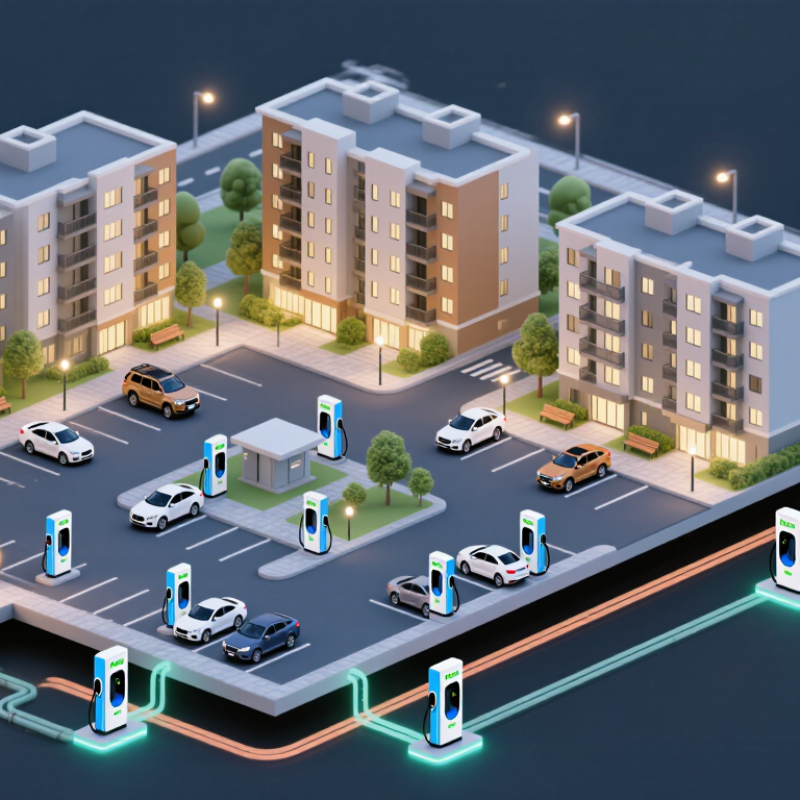
Defining EV charging needs starts with the development, not the charger catalogue. Count dwell patterns across homes, offices, hotels, retail, and shared parking. The IEA’s Global EV Outlook 2024 reports that electric car sales exceeded 14 million globally in 2023. It also records more than four million public charging points worldwide after over 40% growth. Those figures show momentum, not a local design target. A 200-home project needs a different plan from a hospital or logistics site.
Estimate EV ownership for opening day, then test five- and ten-year scenarios. Use local registrations, parking supply, vehicle turnover, and expected occupancy. Measure dwell time. A two-hour retail visit needs different power than an overnight residential stay. The IEA report identifies home charging as the main option where private parking is available. Therefore, residential projects may need many lower-power connections, while commercial sites may need fewer faster points. Demand is uneven. Calculate simultaneous demand, diversity, and peak evening load.
Design spare electrical capacity, cable routes, and accessible bays before concrete is poured. NREL reported more than 180,000 public charging ports in the United States in its Q1 2024 infrastructure report. That network still does not guarantee convenient charging at a new development. Include load management, clear signage, maintenance access, and a simple payment path. A spreadsheet can still be wrong. Construction phasing, grid delays, and uncertain EV adoption can overturn a neat forecast. Recheck assumptions annually, and leave room for expansion without rebuilding the site.
New developments need an electrical plan before chargers appear on drawings. The International Energy Agency reported over 40% growth in public charging points during 2023. That growth makes early capacity checks essential. Engineers should record transformer size, spare capacity, feeder routes, and peak building demand. A parking garage may have space for 40 chargers, but its service equipment may support only 12. Load management can help, though it cannot fix an undersized transformer.
Parking geometry also affects cost and usability. Place charging spaces near accessible electrical routes, not only near entrances. Reserve conduit paths beneath drive lanes before concrete is poured. Keep cable reach, drainage, lighting, ventilation, and pedestrian movement in the layout. The U.S. National Renewable Energy Laboratory projected that millions of additional charging ports will be needed nationally by 2030. That demand makes expansion space valuable, even when initial installation remains modest. A perfect plan is unlikely.
Grid constraints require honest coordination with the utility. Ask about interconnection timelines, available fault capacity, protection upgrades, and demand charges. A site beside a substation may still face months of network studies. The IEA also notes that fast charging creates sharper power peaks than slower workplace charging. Designers should compare overnight, daytime, and event-driven demand profiles. Metering each building separately can reveal avoidable peaks. However, estimated travel patterns are often wrong. Test the assumptions after occupancy, then revise charger numbers, controls, and parking allocation.
New developments need an EV charging plan before concrete is poured. A six-storey apartment project may need different solutions than a small office site. Start by mapping parking spaces, expected driving patterns, and electrical capacity. Select AC chargers for long-stay parking, such as overnight residential spaces. Use higher-power DC chargers where drivers need quick turnover. However, installing fast chargers everywhere can create unnecessary costs and heavy peak demand.
Power levels should match real parking behavior. A home-style charger may suit residents who park for ten hours. A medium-power unit can support workplaces and retail visitors. High-power equipment is useful near entrances, but only in limited numbers.
Keep cables reachable from different vehicle positions. Small details matter. I have seen poorly placed chargers become frustrating obstacles.
Tips: Reserve conduits and electrical space for future chargers. Choose equipment with strong weather protection and clear status displays. Smart charging systems can balance loads, schedule charging during cheaper periods, and prevent transformer overloads. Set priorities for residents, visitors, and accessible parking users. Include load management from the beginning, not as an expensive correction later. Reliable systems also need remote monitoring, maintenance access, and simple payment options. Do not assume every driver will charge at the same time. That assumption is often wrong, but ignoring peak periods is worse. Review the plan with an electrical engineer and facility manager before construction. Appliance growth, solar generation, and changing vehicle sizes may alter the forecast. Erotidque
Planning EV charging for a new development starts with the parking plan, not the charger catalogue. Estimate daily demand, vehicle turnover, and electrical capacity before selecting equipment. Reserve charging spaces near accessible routes and building entrances. Mark them clearly on the construction drawings. A practical layout also protects pedestrian paths from cables and wheel stops.
Install conduits and spare electrical capacity during construction. This usually costs less than opening finished walls later. Provide accessible bays with enough side clearance for mobility equipment. Keep controls, payment points, and cable hooks within comfortable reach. Use durable lighting, weather protection, emergency isolation, and clear operating instructions. Safety reviews should include drainage, ventilation, impact protection, and fire access. A neat installation can still create hazards if delivery vehicles block the route.
Design the system for expansion, not just today's demand. Leave space for additional switchgear, circuits, and parking equipment. Use load management to prevent unnecessary peak demand. Monitor usage after opening, then adjust the number and location of active points. Staff should inspect connectors, signs, and ground markings regularly. One assumption often fails: residents may charge at different times than predicted. Review the data. Change the plan when real behavior disagrees with the model. Contactors, cables, and protective devices also need documented maintenance schedules. Future upgrades become simpler when drawings, test results, and access requirements remain accurate.
Planning EV charging for a new development requires more than counting parking spaces. Start with a load assessment that measures building demand, future vehicle adoption, and available electrical capacity. Include trenching, transformers, switchgear, chargers, networking, permits, and inspection fees in the budget. Keep a contingency reserve. Construction surprises are common.
Confirm approvals with the utility, planning department, fire authority, and electrical inspector before finalizing drawings. Accessible spaces, cable clearance, drainage, lighting, and emergency access need early review. Design conduits for expansion, even if only a few chargers are installed initially. A spare pathway can prevent costly excavation later. It is not glamorous work.
Choose charging levels according to user behavior. Overnight residents may need slower charging, while retail visitors may require faster service. Set operating rules for parking duration, idle fees, payment access, and fault reporting. Assign a responsible operator, not just a contractor. Monitor energy use, session failures, utilization, and peak demand each month. Real data should guide future installations.
Maintenance planning should cover connector inspections, software updates, electrical testing, snow removal, drainage checks, and damaged-cable replacement. Keep critical spare parts nearby when possible. Review warranties and service response times before equipment purchase. Reserve funds for repairs after warranty coverage ends. Our estimates are rarely perfect; occupancy changes, utility delays, and user habits can disrupt them. Review the plan every six months and revise assumptions openly.
Plan it before concrete is poured. Map parking spaces, driving patterns, and electrical capacity early. Retrofitting finished walls costs more.
AC chargers suit vehicles parked overnight or for many hours. A resident may need charging during a ten-hour parking period. Faster equipment is not always better.
Use them where vehicles turn over quickly, such as entrances or visitor areas. Install limited numbers to control costs and peak demand. Too much power can become wasteful.
Keep cables reachable from different vehicle positions. Protect pedestrian paths from cables and wheel stops. Poor placement creates frustrating obstacles.
Reserve conduits, switchgear space, circuits, and electrical capacity. Opening finished walls later is disruptive. Leave room for more charging points.
It balances loads and schedules charging during lower-cost periods. It can help prevent transformer overloads. Do not assume every driver charges simultaneously.
Provide side clearance for mobility equipment near accessible routes. Keep controls and cable hooks within comfortable reach. Add lighting, weather protection, emergency isolation, and clear instructions.
Use remote monitoring and documented maintenance schedules. Inspect connectors, signs, cables, and ground markings regularly. Review the data. Real behavior may challenge the original forecast.
Keep drawings, test results, access requirements, and maintenance records updated. Review usage after opening and adjust active points when needed. Plans are useful, but they are not perfect.
Planning EV charging for a new development begins with understanding how residents, employees, visitors, or customers will use the site. How to plan EV charging infrastructure for new developments requires evaluating current and future charging demand, parking patterns, vehicle dwell times, and expected EV adoption. Developers should also review available electrical capacity, utility connection limits, parking layouts, construction conditions, and potential grid constraints before choosing a system.
The plan should match charger power levels and charging speeds to each user group while incorporating smart charging to manage peak demand and balance energy use. It should also address accessible spaces, safe traffic flow, signage, lighting, cable management, weather protection, and compliance with applicable building requirements. A practical strategy includes installation budgets, permitting, utility coordination, operating responsibilities, payment or access procedures, maintenance schedules, and data monitoring. Finally, conduit routes, spare capacity, and modular equipment should be considered so the charging network can expand efficiently as demand grows.

Greenvora Charger