How to integrate EV chargers with renewable energy will become a practical question for households, businesses, and fleet operators in 2026. The answer involves more than installing solar panels beside charging points. It requires coordinated planning across energy production, battery storage, charger capacity, software, and local grid conditions. A clear strategy can reduce carbon emissions, lower peak-demand costs, and improve charging reliability.
Real-world projects show that timing matters. A workplace charger may draw power at 8 a.m., before rooftop solar reaches its strongest output. Smart charging can delay part of that demand until midday, when sunlight is abundant. On a small commercial site, a 50-kilowatt solar array, a battery system, and load-balancing software can work together. However, results depend on weather, vehicle arrival patterns, and equipment performance. Forecasts are useful, but they are not perfect.
This guide examines system design, energy management, equipment compatibility, and safe commissioning practices. It also considers renewable certificates, backup power, maintenance data, and user behavior. Qualified electricians and energy professionals should verify electrical capacity and follow applicable technical requirements. Independent testing can reveal problems that dashboards hide. A charger may appear efficient while its cable overheats during repeated sessions. That detail matters. Some recommendations will need adjustment as tariffs, grid policies, and vehicle technologies change. A flexible design is therefore more valuable than a rigid promise of complete energy independence.
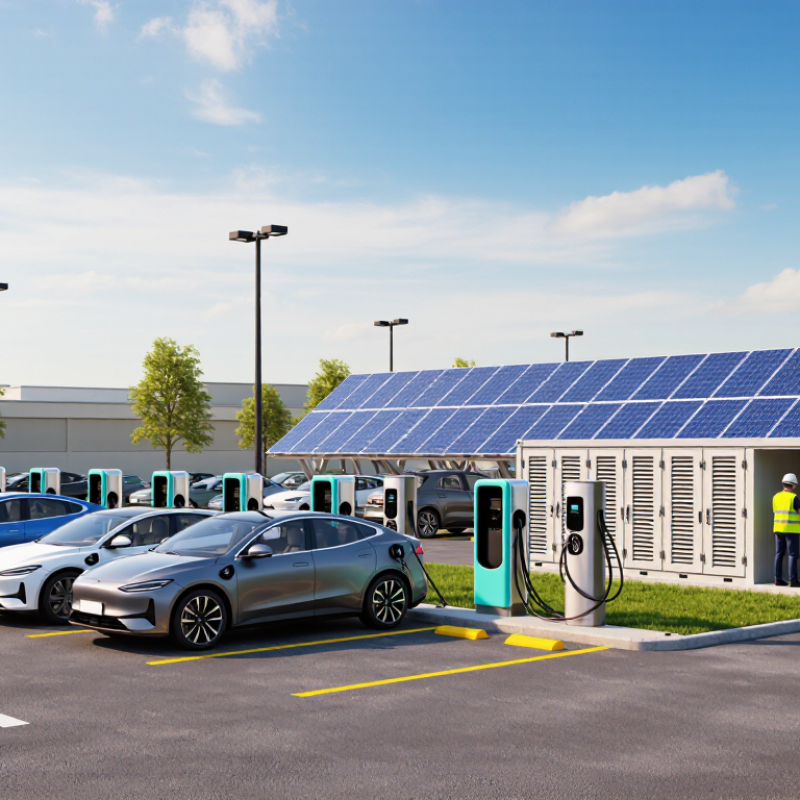
EV charging begins with two basic choices: charging speed and power source. Home AC chargers usually deliver steady power overnight. DC chargers provide faster charging, but they can create sharp demand peaks.
The IEA’s Global EV Outlook 2025 reports that global electric car sales exceeded 17 million in 2024. More than one in five new cars sold was electric. This growth makes careful energy planning essential, not optional.
Solar panels can supply daytime charging, while batteries can store excess electricity for evening use. A smart charger can adjust charging power when solar output changes. It can also respond to grid prices and local demand.
IRENA reported that renewable energy added 585 gigawatts of global capacity in 2024. Renewables represented about 92.5% of total new power capacity.
Still, renewable electricity is not always available when drivers need it. A perfectly green charging plan sounds attractive, but it remains difficult during cloudy evenings or winter peaks.
Tips:
Start with the vehicle’s charging limit and the building’s electrical capacity. Add solar generation data before choosing charger power. Use load management to avoid unnecessary upgrades. In real installations, small timing errors can reduce solar use noticeably. I would also review performance monthly, because a system that looks efficient on paper may behave differently onsite. (Sources: IEA Global EV Outlook 2025; IRENA Renewable Capacity Statistics 2025.)
Before installing chargers, measure the site’s real load profile. A 7.4 kW charger operating for eight hours can require 59.2 kWh. Ten vehicles could therefore demand nearly 592 kWh overnight. Existing transformers, peak demand, and cable capacity may become the real constraints.
Renewable availability must be assessed hourly, not annually. Compare solar irradiation, wind output, seasonal weather, and local grid-import limits.
The International Energy Agency’s Global EV Outlook 2025 reported more than 17 million electric car sales in 2024. That growth makes poorly sized sites increasingly expensive.
The International Renewable Energy Agency also reported that solar photovoltaic costs continued falling in 2023, but low-cost generation does not guarantee power at 6 p.m. during winter.
Use a full year of interval data when possible. Match charging schedules with midday solar, then calculate the remaining energy gap.
For example, a 100 kW solar array may produce strong daytime energy but little after sunset. A battery can shift that energy, although its losses, replacement cycle, and fire-safety requirements need careful budgeting.
The National Renewable Energy Laboratory’s solar resource datasets can support location-level estimates, while utility data should confirm actual connection capacity. Do not trust annual averages alone. They hide bad weeks.
A conservative design should test cloudy periods, simultaneous charging, and future vehicle growth. Some assumptions will be wrong; revising them early is cheaper than upgrading a constrained site later.
Integrating EV charging with renewable energy in 2026 starts with compatibility, not appearance. The charger must match the vehicle’s charging standard, electrical capacity, and solar inverter. A home with a 7.4 kW charger may need more than 8 kW of usable solar output to charge efficiently on cloudy days.
The International Energy Agency reported over 40% growth in public charging points during 2023, showing how quickly charging infrastructure is expanding. However, bigger is not always better. Oversized chargers can increase peak demand and installation costs.
Solar generation is intermittent, so energy storage deserves careful sizing. The battery should store surplus midday power and release it during evening charging, when household demand often rises.
The IEA’s Batteries and Secure Energy Transitions report indicates that global energy storage capacity must expand sixfold by 2030 under current climate goals. For practical design, installers should examine battery round-trip efficiency, usable capacity, thermal protection, warranty terms, and backup priorities.
A 10 kWh battery does not always deliver 10 kWh to the vehicle. Conversion losses matter.
Smart charging software can reduce grid pressure by delaying charging until solar output increases. It should also support load balancing and clear energy monitoring.
Field experience shows that settings are often too complicated for ordinary users. That is a weakness. A technically efficient system can still fail if homeowners cannot understand or adjust it.
Local solar conditions, driving distance, and seasonal demand should guide the final configuration.
Smart charging should begin with the vehicle’s real departure time. A charger can delay power intake when rooftop solar is weak. It can increase charging during a bright midday period. This simple shift reduces grid pressure and improves renewable energy use.
The IEA reported that global electric car sales exceeded 14 million in 2023, representing nearly 18% of new car sales. More vehicles will make unmanaged charging harder to control.
An energy management system should combine charger data, solar forecasts, electricity prices, and battery conditions. Use 15-minute intervals for scheduling. Set a minimum departure charge first. Then allocate surplus solar power to vehicles.
IRENA reported that renewable sources accounted for 92.5% of new global power capacity added in 2024. This growth makes flexible charging increasingly valuable, but only when software reacts quickly.
People still need priority access. A driver leaving at 6:30 a.m. should not lose power because of a poor forecast. Add manual overrides and visible status indicators. Keep the design understandable. Forecasts fail sometimes.
My practical concern is that many systems still optimize electricity costs before driver needs. That order deserves review.
The IEA’s Global EV Outlook also emphasizes coordinated charging as EV adoption expands. Operators should test real charging sessions, not rely only on simulations.
Controls must remain safe during network outages. Simple fallback rules matter.
How to Integrate EV Chargers With Renewable Energy in 2026?
By 2026, EV charging sites will need more than reliable electricity. They will need flexible energy control. The International Energy Agency reported over 17 million electric cars were sold globally in 2024. That growth increases pressure on local transformers and evening demand. Implementation should begin with a site audit, including solar output, grid limits, charger ratings, and parking patterns. A 50-kilowatt charger can behave very differently at noon and after sunset. Engineers should connect chargers to an energy management system, then define charging priorities. Fleet vehicles may charge first, while private vehicles pause during expensive periods. I learned that simple schedules often fail when weather changes suddenly.
Monitoring must combine live data with monthly performance reviews. Track renewable energy use, charging uptime, peak demand, session duration, and missed charging targets. Ember’s Global Electricity Review 2024 found that renewables supplied 30% of global electricity in 2023. However, renewable availability is uneven. A dashboard should show solar forecasts beside charger loads, not in separate systems. Automated controls can lower charging power when clouds arrive. They can also increase output during surplus generation. Still, optimization needs human review. A faulty meter can produce confident, misleading decisions.
Tips: Keep a small grid-power reserve for urgent charging. Test control settings during heatwaves and winter evenings. Store raw data for audits. Review failed sessions every week, even when performance looks acceptable. The system may be efficient, but not resilient.
Charger ratings alone can mislead.
Review hourly solar and wind output across every season. Annual averages hide cloudy weeks and winter evening shortages. Compare renewable production with grid-import limits and charging schedules. Not annual averages.
Usually, solar production falls sharply after sunset. A 100 kW array may produce strong energy at noon but little at 8 p.m. A battery can shift daytime energy into evening charging. Battery losses, replacement needs, and safety requirements increase costs.
Use a full year of interval energy data when possible. Collect solar output, charger ratings, vehicle arrival times, and grid capacity. Parking patterns also matter. One week is not enough.
Connect chargers to an energy management system. Set priorities for fleet vehicles, private vehicles, and urgent sessions. Reduce charging power during expensive periods or weak renewable output. Increase output during surplus generation. Clouds change everything.
Show renewable energy, charger loads, and grid demand together. Track uptime, session duration, missed charging targets, and peak demand. Live data supports quick control decisions. Monthly reviews reveal slower problems.
Automated controls depend on accurate meters and forecasts. A faulty meter can create confident but incorrect decisions. Review failed sessions every week, even when results look acceptable. Some assumptions will be wrong.
Keep a small grid-power reserve for urgent charging. Test control settings during heatwaves, winter evenings, and cloudy periods. Model simultaneous charging and future vehicle growth. I would test more often than the plan suggests. The system may be efficient, but not resilient.
How to integrate EV chargers with renewable energy requires a clear understanding of how charging equipment, solar generation, battery storage, and site electricity systems work together. The process begins by assessing energy demand, charging patterns, available renewable resources, grid capacity, and space for equipment. This information helps determine the appropriate charger types, solar system size, and storage capacity while supporting reliable and efficient operation.
A successful integrated system also depends on smart charging and energy management. Charging can be scheduled to match periods of strong renewable production, reduce peak demand, and preserve stored energy when needed. After installation, continuous monitoring should track energy generation, charging performance, storage levels, and overall system efficiency. Regular analysis and adjustments can improve reliability, reduce operating costs, and increase the use of clean energy as transportation and electricity needs evolve.

Greenvora Charger